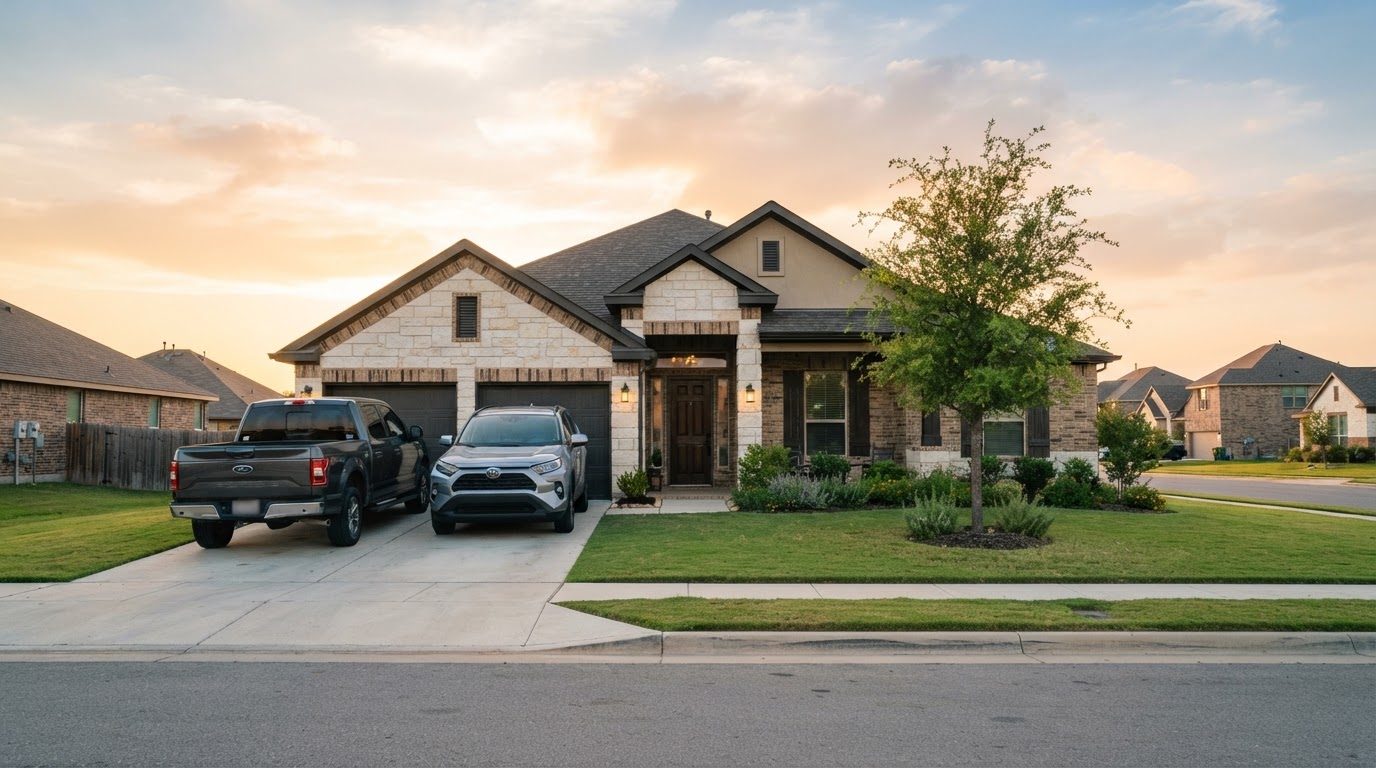
How do dual-military couples buy a home near Fort Hood with a VA loan?
Most dual-military couples near Fort Hood buy with one VA entitlement and keep the other one free for the next duty station. Both spouses can still be on the loan so the lender counts both incomes, including both housing allowances. With no children, each of you is generally paid BAH at the without-dependents rate; with children, one of you draws the with-dependents rate and the other the without-dependents rate. Confirm the structure with your lender and your rates on the official DoD BAH calculator.
By Stephen Harris, Good Life Team | November 27, 2026
Two service members, two Certificates of Eligibility, two housing allowances. That is a lot of buying power, and most couples only need half of it to buy near Fort Hood.
We hear the same questions from dual-military couples every PCS season, and they show up constantly on r/army and r/MilitaryFinance. Do we both use our VA benefit? Do we both get BAH? What happens if one of us gets orders and the other doesn’t? It makes sense that this feels confusing. Most VA guides are written for one service member and a civilian spouse, and nobody hands you the dual-military version.
VA is how most people buy here. In our latest Killeen MLS window (October 31 to November 23, 2026), 43 of 60 single-family closings used VA financing, and the median VA sale was $243,000.

One entitlement or two: the three common setups
Entitlement is the amount the VA promises to repay your lender if the loan goes bad. It is the reason VA loans can be zero down. VA’s Buyer’s Guide treats a spouse’s entitlement as independent from the service member’s, so each of you has your own to use or hold.
That gives you three common ways to set up the purchase:
- One spouse on the loan, one entitlement used. Simple. The other spouse’s entitlement stays untouched. The trade-off is that only one income counts toward qualifying.
- Both spouses on the loan, one entitlement used. The lender counts both incomes and both allowances, and the second entitlement stays free. Both credit files and both sets of debts get underwritten. This is the setup we see most often for couples buying in Killeen, Harker Heights, and Copperas Cove.
- Both spouses on the loan, both entitlements used. VA lenders can structure a loan this way, with the guaranty tied to each veteran’s share. It mostly matters when one of you still has entitlement tied up in a home at a prior duty station, or when the price is high enough that one remaining entitlement would leave a down payment gap.
Why hold one back? Because Fort Hood is rarely your last stop. If you keep this house as a rental after your next PCS, the free entitlement lets you buy again at the next installation without waiting to sell. We break that path down in a second VA loan while keeping your last house and keeping your Fort Hood home as a rental after PCS.
Ask the lender to price the funding fee both ways
The VA funding fee depends on whose entitlement is used, how many times it has been used, and whether that person is exempt. VA.gov lists exemptions such as receiving VA disability compensation. If one of you has a rating and the other doesn’t, ask the lender to show the funding fee under each setup before you choose. Our post on the VA funding fee and exemptions covers who qualifies.
BAH for dual-military couples: what the lender actually counts
The Defense Travel Management Office’s BAH FAQ says that when married service members have dependents, one receives the with-dependents rate and the other the without-dependents rate. Custody rules decide who claims the children. When there are no children, each of you is generally paid at the without-dependents rate, because a service member is not counted as the other’s dependent for BAH. Your finance office confirms your exact entitlement.
We don’t quote BAH dollar figures in this post on purpose. Rates change every January and depend on rank and dependency status, so pull your numbers from the official DoD BAH calculator for the Fort Hood area.
Three things to know about how a lender uses those allowances:
- Both allowances can count as income when both of you are on the loan. That can push your approval well past what you would want to spend.
- Approval is a ceiling. Set your payment so the house still works on one income and one allowance. If one of you separates, gets orders, or deploys long term, the mortgage doesn’t change.
- Residual income still applies. VA checks what is left over each month after the payment and debts, by family size. Two incomes usually help here, and two car payments usually hurt. See VA residual income near Fort Hood.
When orders split you up
This is the risk that belongs to dual-military couples. The Army’s Married Army Couples Program works to assign couples together, but it is a request, and it doesn’t guarantee you leave Fort Hood on the same timeline.
Before you write an offer, talk through these:
- Occupancy. VA loans require that you intend to live in the home. When one spouse is away on orders, the other living in the home generally satisfies that. Our post on VA occupancy rules walks through it.
- Who signs at closing. If one of you is in the field or already gone, a specific power of attorney needs to be approved by the lender and title company well before closing day.
- Rentability. If one of you leaves early and the other follows later, will the house rent for close to the payment? We look at that on every Fort Hood purchase, because it protects you either way.
- Buy or rent first. Two short remaining time-on-station windows change the math. Our rent first or buy on arrival post runs that comparison.
We are real estate brokers, not lenders, so the loan structure is your lender’s call. Our job is to make sure the homes you tour match the setup you chose, and then protect you through the option period, the VA appraisal, and repair negotiations. That is the core of our Smart Buyer Plan.
Frequently Asked Questions
Can two service members married to each other both be on one VA loan?
Yes. Both spouses can be on the loan, and the lender can use one entitlement or both. Many dual-military couples near Fort Hood put both names on the loan so both incomes count, while using only one entitlement and saving the other for a future purchase.
Do both dual-military spouses get BAH at Fort Hood?
Generally, yes, when you are not assigned government quarters. With children, DoD’s BAH guidance says one spouse receives the with-dependents rate and the other the without-dependents rate. Without children, each is generally paid the without-dependents rate. Check current rates on the DoD BAH calculator and confirm with your finance office.
Should we use both VA entitlements to buy in Killeen?
Usually there is no need at typical Killeen prices. The median VA sale in our latest Killeen data was $243,000, well within what one full entitlement covers. Using both mostly makes sense when one of you has entitlement tied up in another home.
What happens to our VA loan if one of us PCSs away from Fort Hood?
The loan stays the same. VA occupancy is generally satisfied when one spouse keeps living in the home. When you both leave, you can keep the house as a rental, and a free second entitlement makes buying at the next duty station much simpler.
Two service members have more VA buying power than they need near Fort Hood. The smart move is usually to use one entitlement, count both incomes, set the payment so it works on one paycheck, and keep the second benefit ready for your next set of orders.
If you and your spouse are both headed to Fort Hood, book a free Smart Buyer Plan call with our team. In 30 minutes we’ll walk through your budget, your timeline, and the areas that fit, and show you how we protect you from the first showing to the closing table. No pressure, no pitch. Book your call here, text or call 256-226-2757, or email stephen@mygoodlifeteam.com. Still sorting out orders? Start with our Fort Hood PCS guide.
About Stephen Harris & The Good Life Team
Stephen Harris is a Texas Real Estate Broker (TX license 677386, All City Real Estate) and leads the Good Life Team, a Central Texas team that represents home buyers in Killeen, Harker Heights, Copperas Cove, Belton, Temple, Nolanville, Hutto, Pflugerville, and Round Rock. The team specializes in relocation buyers, Fort Hood PCS moves, VA loans, and new-construction representation, with roughly 500 closings and about $100M in volume. Their Smart Buyer Plan is built around one idea: who represents you matters, and our job is to protect you.
Sources: VA Home Loan Buyer’s Guide (spouse entitlement, joint loans); VA.gov, Funding Fee and Closing Costs (exemptions); Defense Travel Management Office, BAH Eligibility FAQ (members married to members); DoD BAH calculator. Killeen figures: CTXMLS single-family closings, October 31 through November 23, 2026, compiled by the Good Life Team. This article is general information, not lending, pay, or legal advice; Stephen Harris is a real estate broker, not a lender, finance officer, or attorney. It is not endorsed by the VA, the Department of Defense, or the U.S. Army. Material relationships: this article names no lender, title company, inspector, or builder. Texas law requires all license holders to provide the Information About Brokerage Services form. TREC Consumer Protection Notice. Equal Housing Opportunity.